
What a Time of Flight camera actually is
A Time of Flight camera is a depth sensor with resolution. Where a basic ToF module measures one distance (how far away is the nearest thing in front of me), a ToF camera measures thousands of distances at once, one per pixel, and assembles them into a depth image: a picture in which every pixel is a distance rather than a color. That difference, one measurement versus a full depth frame, is what separates a proximity sensor in a phone from a camera that can see the shape of a scene.
How does a Time of Flight camera work?
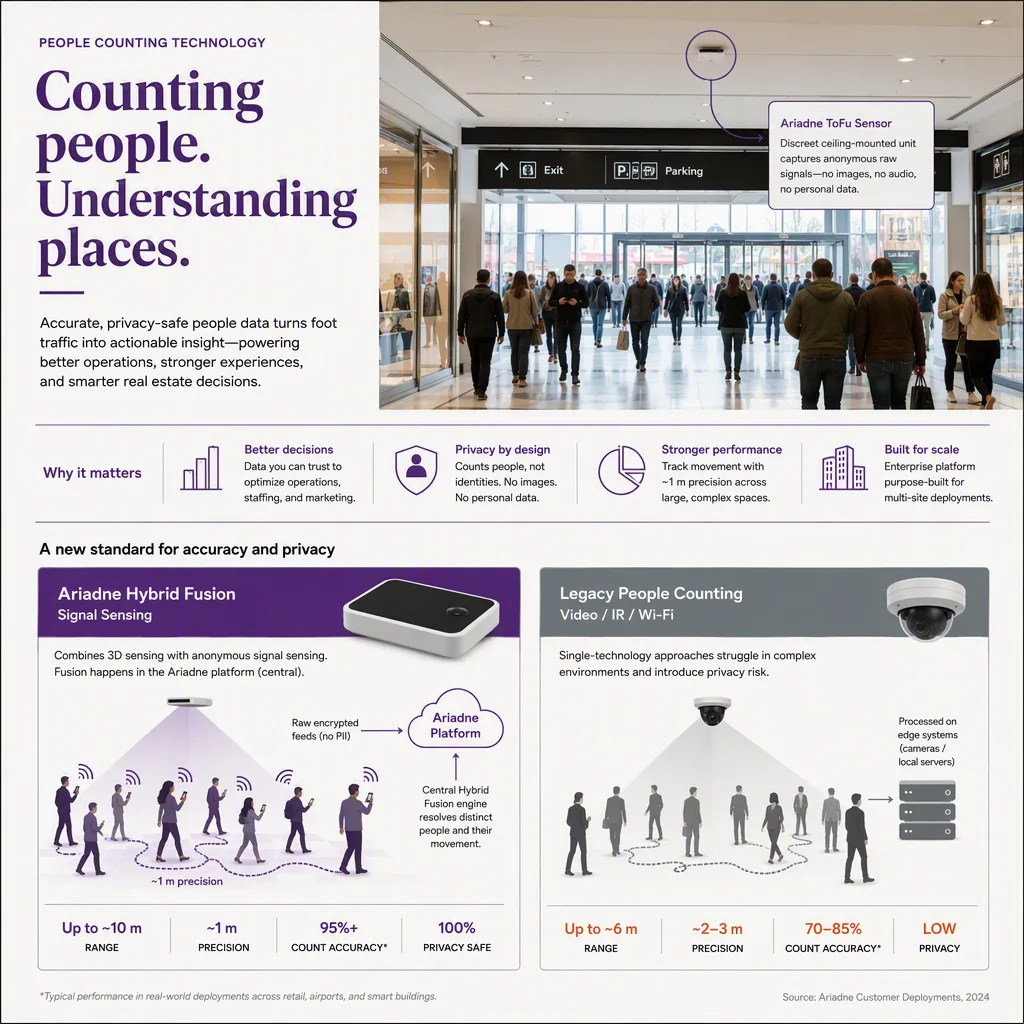
The camera floods the scene with infrared light from its own emitter, usually a VCSEL (a small laser diode array). The reflected light lands on a detector array, and the camera measures, for every pixel, how long the light took to make the round trip. Two measurement families exist, direct and indirect, and they behave differently enough to matter when buying; direct vs indirect Time of Flight covers that split. The output, many times per second, is a fresh depth frame of the whole scene.
What the output looks like
A depth frame is not a photograph. Displayed on screen it looks like a heat map of distance: near surfaces bright, far surfaces dark, a person a moving human-shaped blob. There is no texture, no color, no face. That is not a privacy filter applied afterward; the sensor never captured appearance in the first place. The formats these sensors produce, and how depth frames relate to point clouds, are covered in depth maps vs point clouds.
Where ToF cameras are used
- Consumer devices: camera autofocus assistance and depth effects, augmented reality scene mapping.
- Robotics and drones: near-field obstacle detection where a fast full-scene depth update matters more than long range.
- Logistics: box dimensioning, pallet fill measurement, bin picking.
- Industrial safety: presence and intrusion zones around machinery.
- Buildings and retail: overhead people counting, queue measurement, occupancy sensing.
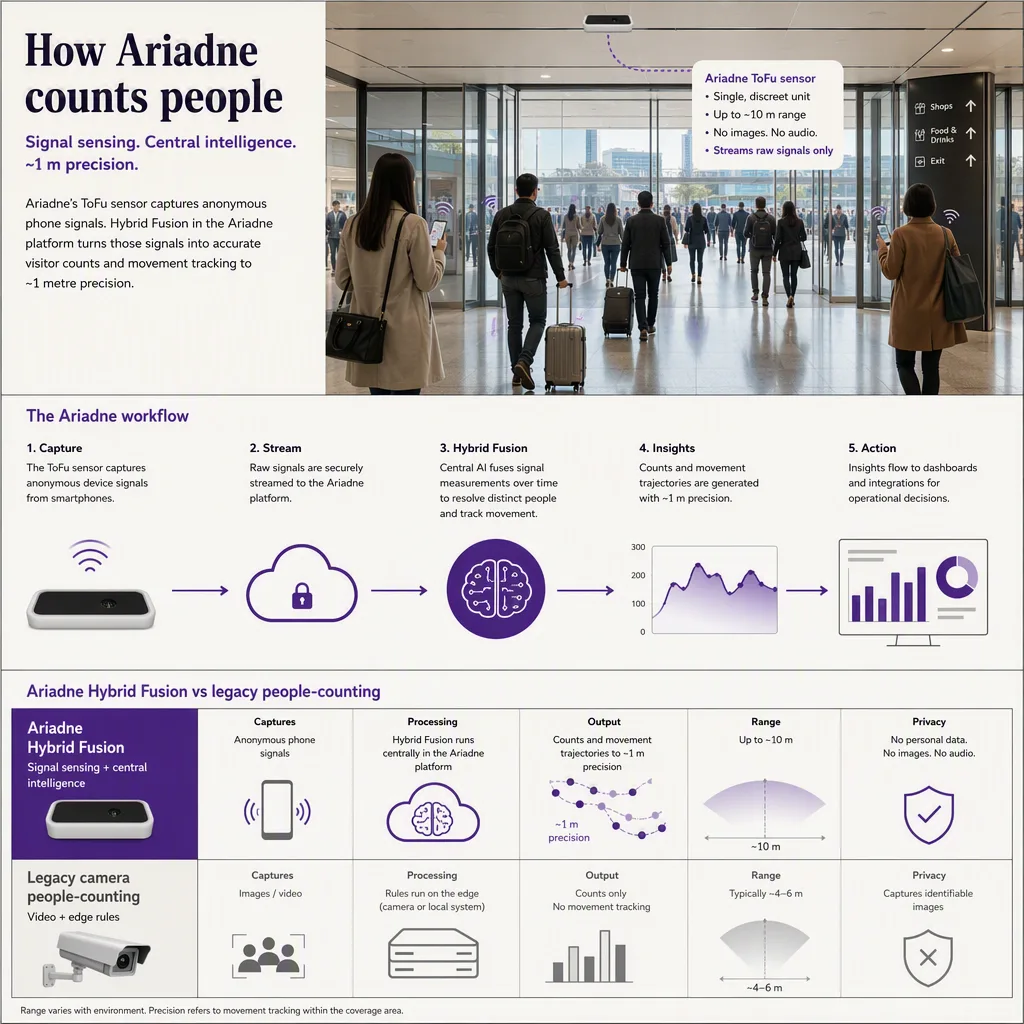
The overhead counting case is worth spelling out. Mounted above a doorway looking down, a ToF camera sees each passing person as a distinct head-and-shoulders shape in the depth image. Software tracks those shapes across a virtual line and counts entries and exits. Light level does not matter (the camera brings its own), shadows do not create phantom visitors, and nothing resembling CCTV footage ever exists. The pillar post explains the sensing chain end to end: Time of Flight sensors, explained.
The limits to know about
ToF cameras are short-range instruments; past a few meters the returning signal weakens fast. Strong sunlight raises the noise floor, which is why outdoor deployments need specific engineering (ToF in sunlight covers the physics). Highly reflective or light-absorbing surfaces can distort individual pixels, and indirect-ToF designs can suffer multipath errors in corners. None of these limits bite in the overhead-counting geometry, which is one reason the counting industry adopted the technology so widely.
Where Ariadne fits
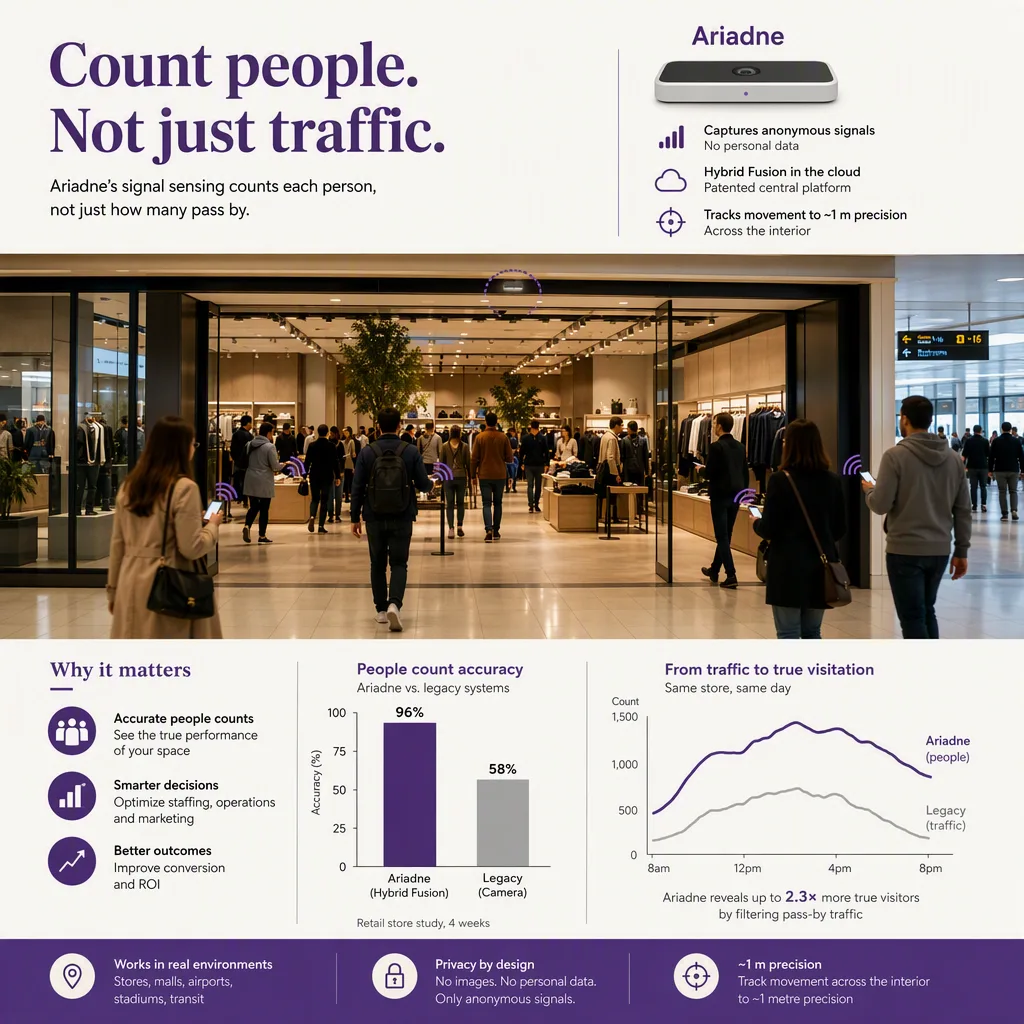
Ariadne uses ToF depth sensing at entrances as one half of Hybrid Fusion, its camera-free measurement method: depth sensing counts every visitor at the door, patented phone signal sensing follows movement through the interior, and the platform fuses both into counts, dwell, and paths with no identifiers involved. If your interest is a counting project rather than the sensor physics, start with how the ToF people counter category works.
---


